
Where Buncombe Crime News Appears
828 News NOW Crime & Safety runs the strongest dedicated crime section in the area. Expect arrests, drug cases, jail incidents, and law-enforcement releases from Asheville and across the county. WLOS Local News also covers regional crime. It sometimes follows an arrest with later court details. Neither one works as a booking feed.
The Asheville Citizen-Times reports on Asheville, Buncombe courts, and county events through its news pages. Mountain Xpress covers Asheville and Western North Carolina more broadly. Sheriff's releases and social accounts can add public-safety updates. Still, they don't publish every booking photo. Watch the city label on a story, too. It may describe a nearby area rather than a municipal boundary, so confirm which agency made the arrest.
For city-specific records, Asheville offers an official police report search. Black Mountain and Woodfin route through their own police records paths. Anyone held on a county booking ends up at the Detention Facility and the Sheriff's catalog.
Buncombe Outlets and Their Records
Every outlet serves a different purpose here. Official sources lead on custody and case status. Local media adds story context. Aggregators, meanwhile, are unofficial copies that can linger online long after release or a court change.
| Outlet | Coverage and photos | Access and caution |
|---|---|---|
| 828 News NOW | Frequent crime and safety reporting; booking photos are sometimes credited to BCSO. | Story discovery and context, not a full roster. |
| WLOS | Regional television news; may show detention images and court follow-up. | Read the individual story and verify the official case. |
| Asheville Citizen-Times | Newspaper coverage of Asheville, courts, and Buncombe events; no stable public mugshot gallery confirmed. | Use as story coverage, not an arrest log. |
| Mountain Xpress | Local Asheville and Western North Carolina reporting; no dedicated booking feed confirmed. | Context only, after official sources. |
| RecentlyBooked and Busted Newspaper | Unofficial recent or historical copied entries; may show photos. | Verify with the Sheriff's roster and court file. |
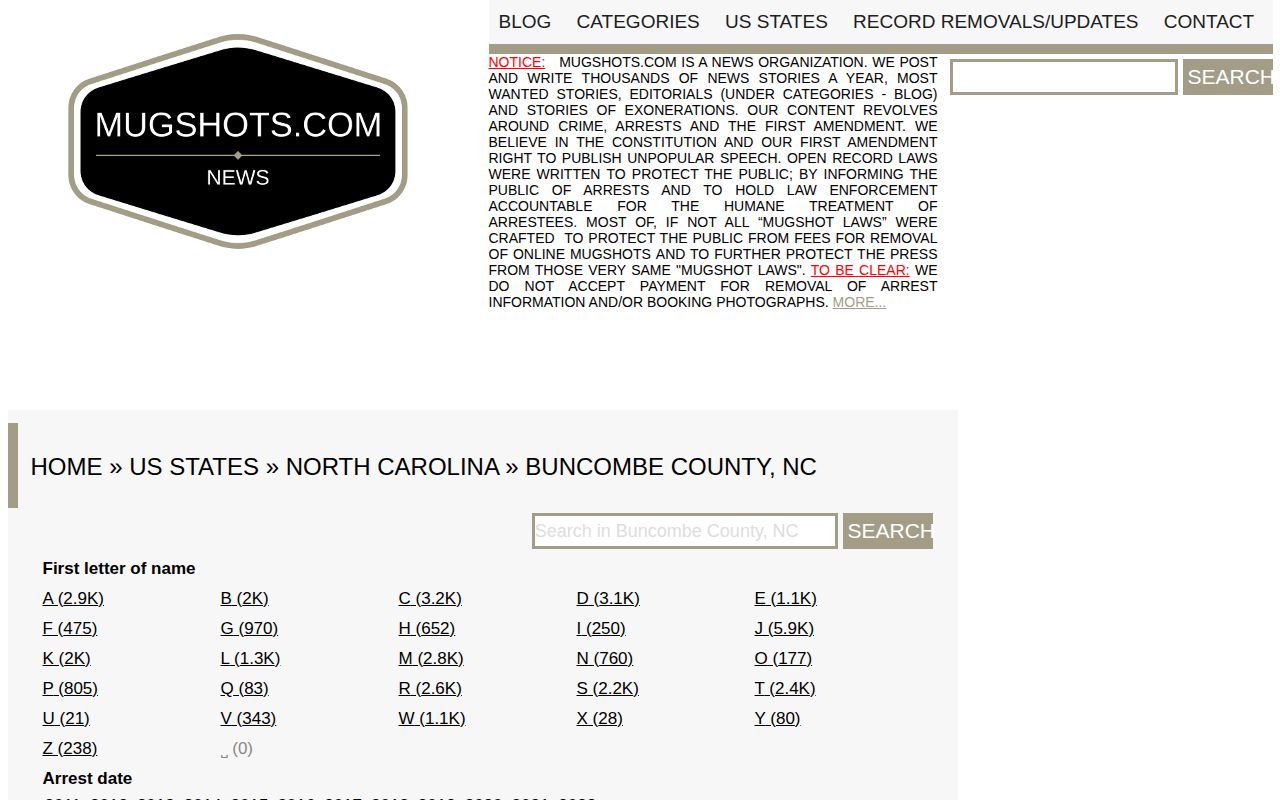
| Mugshots.com, Arrests.org, and Mugshots.zone | Unofficial county pages with varying date and location labels. | Not current-custody authorities; policies and accuracy vary. |
The official detention page explains where local bookings go. It anchors any story that mentions someone held at the county jail.
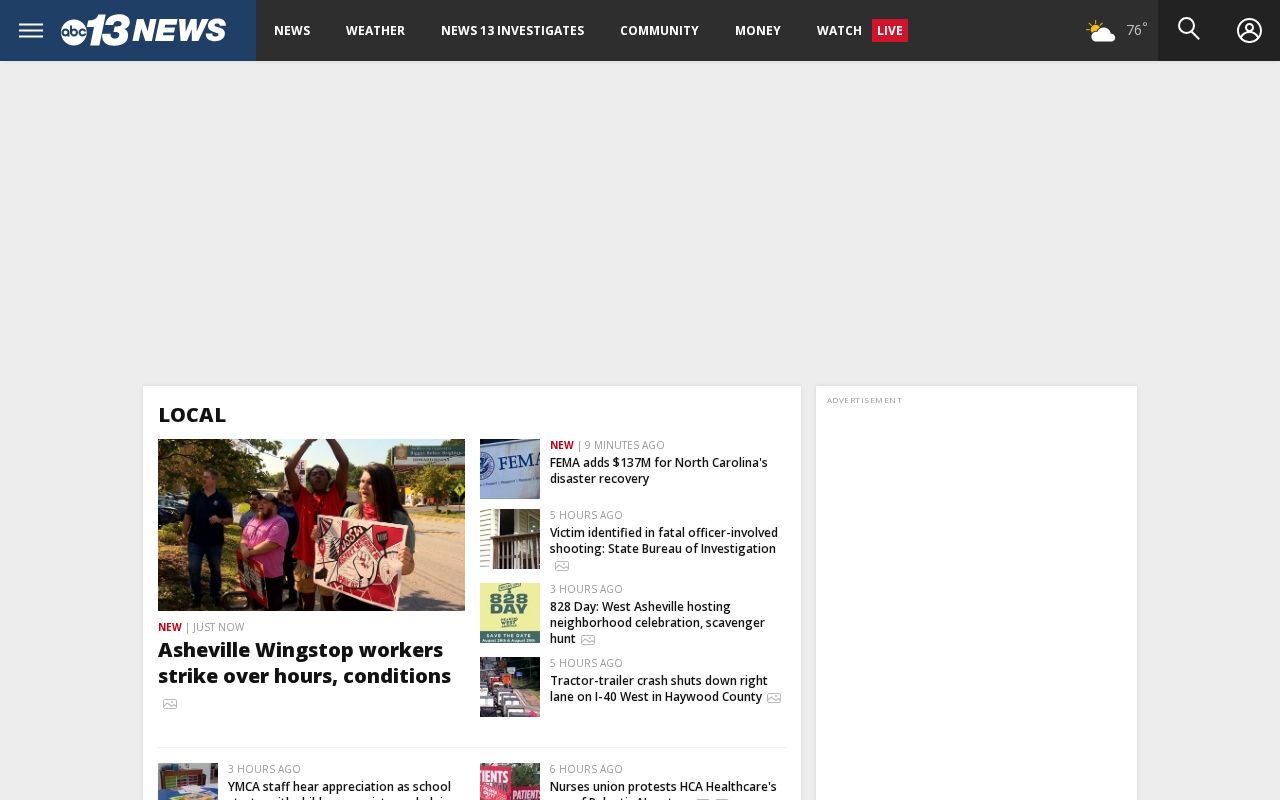
A news-section landing page is not a photo gallery. Stories can point to a case, but booking and court records still need separate checks.
WLOS sometimes adds court context after an arrest. That reporting helps, but the Clerk's file holds the recorded disposition.
How Booking Photos Reach Local News
Local outlets get booking photographs from the Buncombe County Sheriff's Office, a detention or police public-information channel, or a records request. 828 News NOW examples credit BCSO photos. WLOS examples use detention images or composites, crediting APD, BCSO, or another official source. Remember the outlet publishes the image. It does not keep the record.
North Carolina law governs how these images flow. G.S. 132-1 broadly covers government records, including photographs and electronic data. G.S. 132-1.4 identifies public arrest facts while limiting investigative material. G.S. 15A-502 authorizes arrest photographs and fingerprints in the circumstances the statute describes. Still, none of that guarantees a booking photo will appear in a news story or the online roster.
Some agencies send proactive releases for major events. Others respond only to a targeted request, and a newsroom may decline to publish a photo at all. A story can even carry an image copied from an unofficial page. So check the caption and its source. A news image doesn't prove anyone remains in custody.
From News Story to Official Record
A story typically yields a name, date, agency, location, charge, or case number. Treat those details as routing clues, not the final word. The official record comes next.
- Save the story date, person's name, agency, incident location, and case number if shown.
- Check the Sheriff's current inmate catalog if the person may still be held at the county facility.
- Check the Daily Bulletin for a recent booking or release event. No official posting interval was confirmed.
- Use the arresting agency's records route for the police report. Asheville, Black Mountain, and Woodfin each have different city processes.
- Search Buncombe County in eCourts and read the case events and disposition, remembering that a name match is not fingerprint based.
- If the person is released or the online record is unavailable, use the county records request portal.
A story can report an arrest accurately while the court later records a dismissal, reduction, plea, or pending case. Rely on the disposition the court states.
The Buncombe Clerk maintains the official court records. Criminal checks run through the Clerk's process, and a certified name inquiry costs $25 as a separate product. The public portal helps with case details. It is not the certified file.
City Coverage Is Not a Blotter
Asheville draws the most consistent city-level coverage among local outlets. Black Mountain and Woodfin appear when something newsworthy happens. No verified daily mugshot feed exists for either. Aggregator labels can also tag postal places, neighborhoods, or spots near a city. Before assuming anything, confirm whether the responding agency was APD, Black Mountain Police, Woodfin Police, BCSO, or another department.
Woodfin's official police totals document covers aggregate activity, not person-level booking photos. Black Mountain's public-records page offers a police-to-citizen request path. It notes that active criminal-investigation records may be restricted. Asheville's police pages describe online searching for most reports, arrest records, and crash reports from 2003 forward. Those city sources beat a copied city tag every time.
Correcting a News or Copy Error
Spotting a mistake starts with a side-by-side check. Pull the Sheriff's record, the police report, and the court file, then compare each against the news story or aggregator entry. If something is wrong, write down the exact URL, the name, the booking date, and what needs fixing. The agency that made the arrest can hand over the official record, and every publisher has its own correction process worth asking about.
Free help exists at two of the biggest sites. Busted Newspaper offers a free correction and removal form. RecentlyBooked spells out no-fee requests for entries that are wrong, outdated, attached to the wrong person, duplicated, dismissed, sealed, or expunged. Other aggregators vary, so no single free process covers them all.
Going the legal route? An expunction begins with North Carolina Courts and the Buncombe Clerk. Eligibility turns on the details of the case, so the forms do too. Once a judge signs the order, that paper carries weight with both the original custodian and private publishers. One caution applies to search engines. Refreshing a result only changes the index, never the government record underneath it.
Check the Caption and Source
Where did that booking photo come from? It might belong to BCSO, a detention facility, a police department, or some other source entirely. Captions and article text usually name the agency, the date, and the case facts. Read them. A photo can predate the story it sits beside, and a story may describe a release or court event that the current roster doesn't show. Never assume the outlet took the picture itself.
Separate sources stay separate. The official Sheriff catalog, the Daily Bulletin, the police records unit, and eCourts each require their own check. An Asheville story calls for APD's report tools. Black Mountain and Woodfin stories go through those towns' police channels. For someone already released, a records request may be the only way to reach the booking record that was kept.
Good local reporting earns its keep when it includes a case number, an arresting agency, or later court context. Those details cut down on name-match errors. Headlines compress; the Clerk's docket is where the formal outcome lives.